
TSS·WPC
WPC Cladding
WPC Decking
Barefoot-friendly outdoor floors.
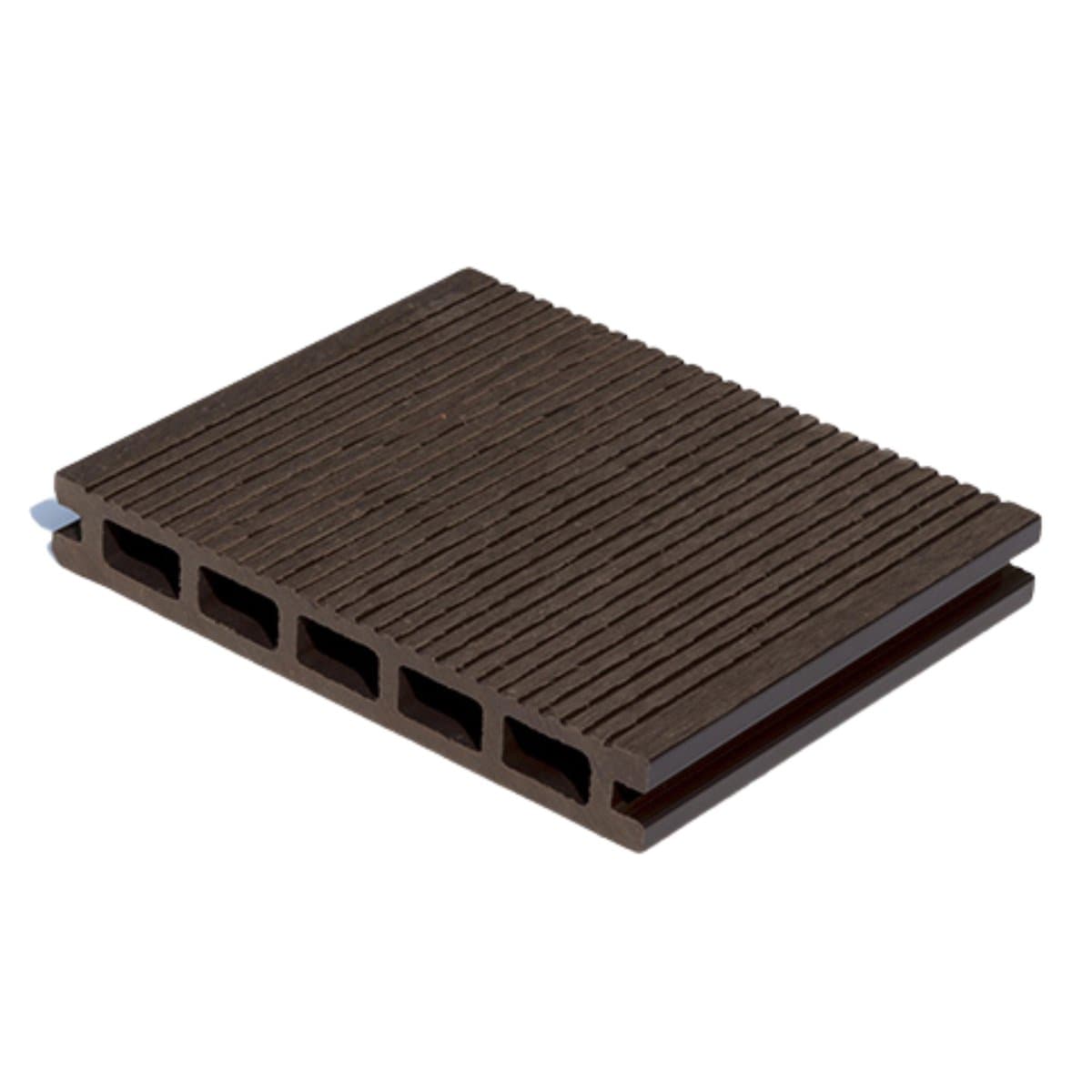
WPC decking from TSS brings the warmth of natural timber to outdoor floors without the maintenance that real wood demands. Engineered from a blend of reclaimed wood fibre and high-density polyethylene, each plank is moulded with a deep wood grain and a textured, anti-slip surface that stays comfortable underfoot — barefoot-friendly around pools, splinter-free on balconies and steady in the wet.
WPC decking from TSS brings the warmth of natural timber to outdoor floors without the maintenance that real wood demands. Engineered from a blend of reclaimed wood fibre and high-density polyethylene, each plank is moulded with a deep wood grain and a textured, anti-slip surface that stays comfortable underfoot — barefoot-friendly around pools, splinter-free on balconies and steady in the wet.
Unlike solid timber, the composite will not warp, rot, crack or feed mould, and it shrugs off the cycle of sun and rain that defeats ordinary decking. A UV-stable formulation holds colour across teak, walnut, grey and charcoal tones, while the homogeneous core resists swelling and water ingress so the boards stay flat and true season after season.
Supplied across Europe, North America and beyond to EN 15534, ISO 9001 and CE requirements, our WPC decking is specified for balconies, terraces, pool surrounds and rooftop sit-outs where appearance, safety and longevity all matter. Full technical documentation, samples and test reports accompany every order.
- Plank profile
- 150 × 25 mm
- Standard length
- 2200 mm
- Composition
- 60% wood fibre + HDPE polymer
- Surface finish
- Brushed / grooved anti-slip wood grain
- Colours
- Teak · walnut · grey · charcoal
- Density (typical)
- 1.20–1.35 g/cm³
- Water absorption (typical)
- ≤ 2% (24 h immersion)
- Slip resistance
- Class R11 / pendulum PTV ≥ 36 (wet)
- Reaction to fire
- Class Bfl-s1 to EN 13501-1 (typical)
- Linear thermal expansion (typical)
- ≈ 40–60 × 10⁻⁶ /K
- Flexural strength (typical)
- ≥ 20 MPa
- Anti-slip rating
- DIN 51097 Class C (barefoot, wet)
- Service temperature
- −30°C to +60°C
- Weight per plank (typical)
- ≈ 4.0–4.5 kg
- Profile type
- Solid / hollow-core (project dependent)
- Packaging
- Strapped bundles, palletised and film-wrapped
▸Balconies & terraces
A warm, low-maintenance floor for apartment balconies and private terraces that stays splinter-free underfoot.
▸Pool surrounds
Anti-slip, barefoot-rated boards that stay cool and secure in constantly wet, chlorinated conditions.
▸Garden decks
Rot- and insect-resistant decking for raised garden platforms, walkways and outdoor lounging areas.
▸Rooftop sit-outs
UV-stable planking for exposed rooftop terraces and sky decks that endure full sun and rain.
▸Hospitality & resort decks
Durable, uniform finishes for hotel poolsides, cabana decks and spa terraces with heavy foot traffic.
▸Anti-slip
Grooved, textured surface delivers reliable wet grip for safe footing around water and on balconies.
▸UV resistant
Light-stabilised formulation resists fading so colour stays consistent under prolonged sun exposure.
▸Splinter-free
The composite surface never splinters or cracks, keeping decks comfortable for bare feet and children.
▸Eco-friendly
Made from reclaimed wood fibre and recyclable polymer, reducing reliance on virgin hardwood.
▸Weatherproof
Low water absorption means the boards will not rot, warp or swell through repeated wet-dry cycles.
▸Low maintenance
No painting, oiling or sealing required — periodic washing keeps the finish looking new.
EN 15534
Composites made from cellulose-based materials and thermoplastics (WPC) — defines characterisation, performance and decking profile requirements.
EN 13501-1
Reaction-to-fire classification for construction products, including the Bfl/Cfl floor-covering classes applied to decking.
DIN 51097
Slip resistance of wet barefoot areas (Classes A/B/C) — relevant to pool surrounds and balconies.
DIN 51130 / R-rating
Slip resistance of workplace and pedestrian floor surfaces (R9–R13) measured on the inclined ramp.
ISO 9001
Quality management system governing consistent manufacture, traceability and documentation.
- ▸Fix to a level joist substructure with concealed clips and stainless fasteners; recommended joist centres of 300–400 mm for residential loading.
- ▸Leave expansion gaps at board ends and perimeters (typically 4–6 mm) to accommodate thermal movement over the temperature range.
- ▸Ensure a continuous fall and free drainage beneath the deck; maintain ventilation gaps so the underside dries between wettings.
- ▸Acclimatise boards on site before installation and stagger end joints across adjacent rows for a balanced appearance.
- ▸Store flat on bearers, fully supported and protected from prolonged direct sun until laid; handle on edge to avoid surface scuffing.
- Teak
- Warm golden-brown wood tone
- Walnut
- Deep rich-brown wood tone
- Grey
- Contemporary neutral grey
- Charcoal
- Dark anthracite finish
- Profile
- Solid or hollow-core, 150 × 25 mm
- Surface
- Brushed wood-grain or fine-grooved anti-slip
Popular colours and the standard 150 × 25 mm profile are typically held in stock for prompt despatch, with bespoke colours, lengths and surface textures produced to order on a short manufacturing lead time confirmed at enquiry; physical samples and colour swatches are available ahead of commitment, and every consignment ships with full documentation — Technical Data Sheet, reaction-to-fire and slip-resistance test reports, ISO 9001 certification, CE declaration and product warranty — supported by export-ready packaging and complete shipping paperwork for delivery across Europe, North America and beyond.
WPC Decking
questions.
Yes. The textured, grooved surface is rated for wet barefoot areas (DIN 51097 Class C, typical) and is splinter-free, so it stays grippy and comfortable around pools.
The decking uses a UV-stabilised formulation that resists fading. A slight, even mellowing can occur in the first months of exposure, after which the colour remains stable.
Allow roughly 4–6 mm at board ends and perimeters, and follow the recommended joist centres of 300–400 mm. Exact gaps depend on board length and site temperature at the time of fixing.
No. Unlike timber, it requires no oiling, sealing or painting — periodic washing with water is enough to keep the surface looking new.
It typically achieves Class Bfl-s1 reaction to fire under EN 13501-1. Classified test reports are issued with each order; confirm the project-specific requirement at enquiry.
Yes. Beyond our stocked teak, walnut, grey and charcoal, bespoke colours, lengths and surface textures are produced to order on a short lead time, with samples supplied for approval first.
Yes. We supply across Europe, North America and beyond, with export-ready packaging and full paperwork — TDS, test reports, ISO 9001, CE declaration and warranty — accompanying every shipment.
WPC Cladding
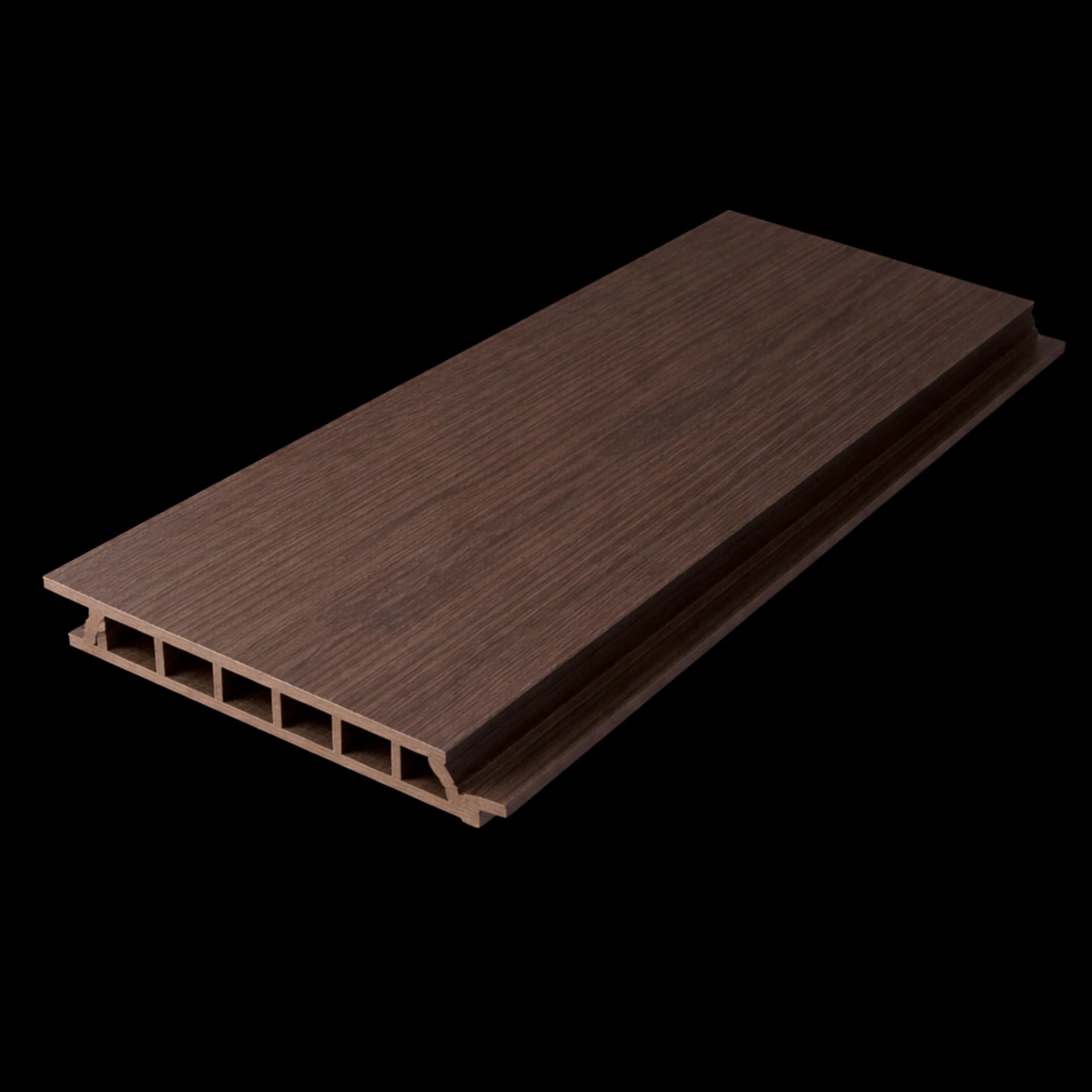
WPC Designer Cladding
Co-extruded wood-plastic composite cladding with a designer profile — the look of natural timber with none of the painting, sealing or rot.
- Profile
- Designer
- Material
- Wood-plastic composite
- Finish
- Co-extruded wood grain
- Use
- Exterior grade
WPC Cladding
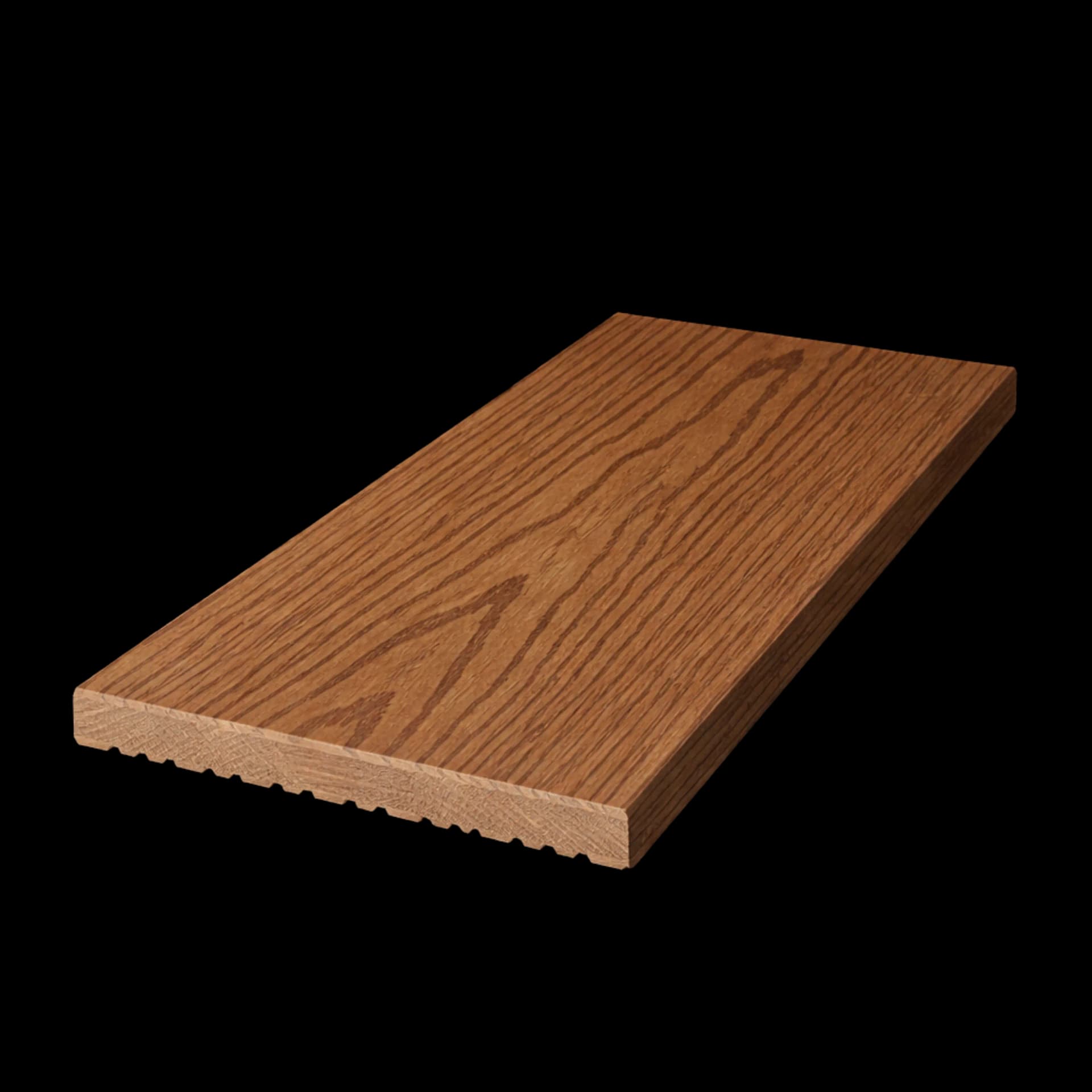
WPC Solid Cladding
Solid-core WPC cladding boards for high-traffic and exposed façades — dense, impact-tough and dimensionally stable through the seasons.
- Core
- Solid
- Material
- Wood-plastic composite
- Finish
- Wood grain
- Use
- Exterior grade