
TSS·WPC
WPC Cladding
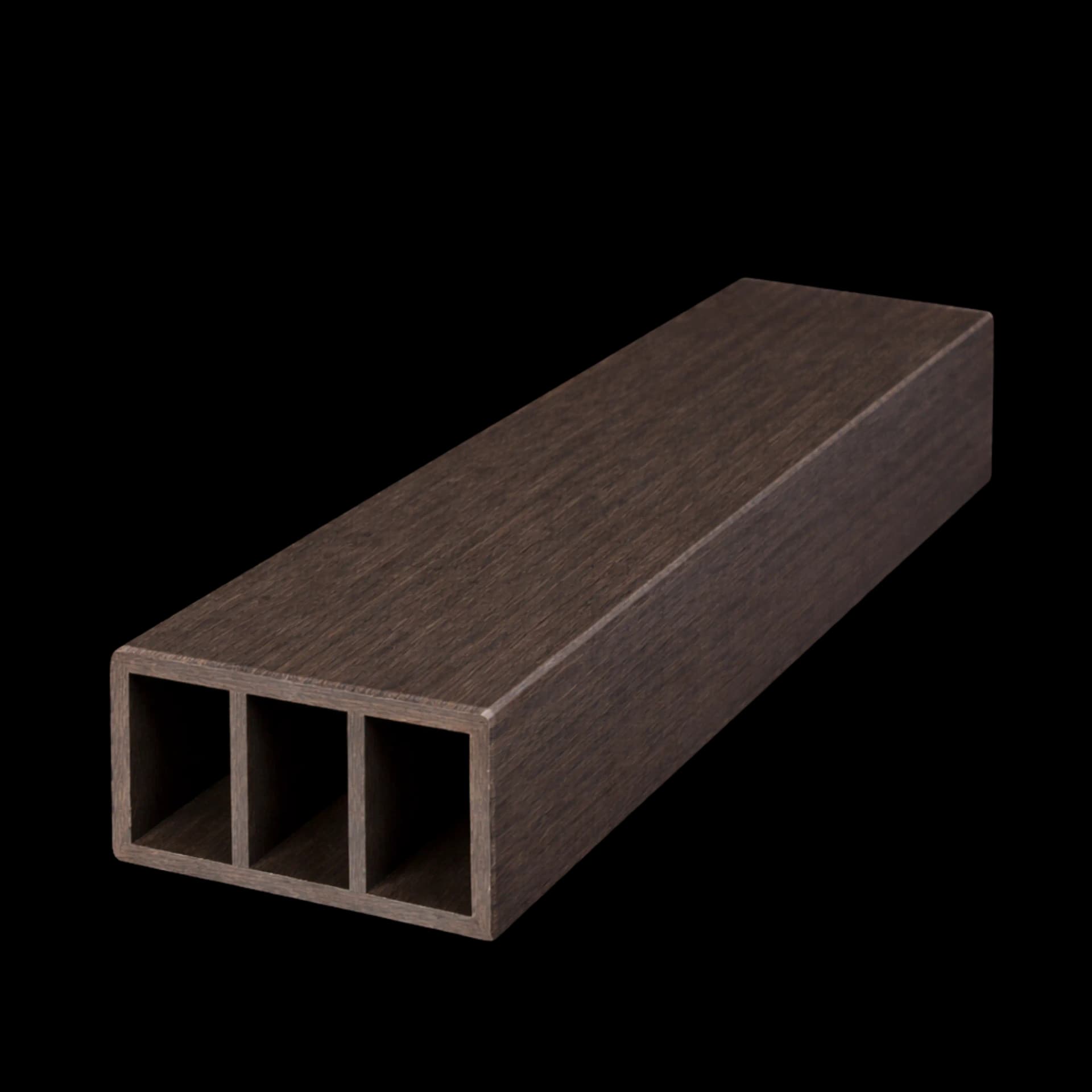
WPC Hollow Cladding
Lighter boards, faster spans.
WPC Hollow Cladding is a hollow-section wood-plastic composite board engineered for exterior façades, ceilings and soffits where structural load and installation speed both matter. The hollow core removes material from the centre of the profile, cutting weight per square metre against a solid board of the same footprint while retaining the dense, weatherproof composite skin that gives WPC its durability. The result is a board that spans further between battens, lightens the dead load on the supporting structure and lifts faster on site.
WPC Hollow Cladding is a hollow-section wood-plastic composite board engineered for exterior façades, ceilings and soffits where structural load and installation speed both matter. The hollow core removes material from the centre of the profile, cutting weight per square metre against a solid board of the same footprint while retaining the dense, weatherproof composite skin that gives WPC its durability. The result is a board that spans further between battens, lightens the dead load on the supporting structure and lifts faster on site.
Formed from a homogeneous blend of wood flour and high-density polyethylene with UV stabilisers and processing additives, the composite resists moisture ingress, fungal attack and the splitting, warping and annual upkeep associated with natural timber. The embossed wood-grain face presents a warm, authentic timber appearance that holds its colour and texture through repeated wet-dry and freeze-thaw cycles.
Supplied to representative EN and ASTM benchmarks for weathering, dimensional stability and reaction to fire, WPC Hollow Cladding is delivered with full technical documentation and is supplied across Europe, North America and beyond. It is well suited to ventilated rainscreen façades, canopy linings and covered external ceilings where a low-maintenance, dimensionally stable cladding is required at reduced weight.
- Core
- Hollow chambered section
- Material
- Wood-plastic composite (wood flour + HDPE)
- Finish
- Embossed wood grain
- Use
- Exterior grade / ventilated façade
- Typical board width
- 148–219 mm (profile dependent)
- Typical board thickness
- 21–26 mm
- Typical length
- 2.9 m / 3.6 m / 5.8 m
- Typical density
- approx. 1.10–1.25 g/cm³
- Typical weight
- approx. 4.5–6.0 kg/m² (hollow section)
- Water absorption (24 h)
- typically < 2%
- Reaction to fire
- typically Class D-s2,d0 to EN 13501-1
- Thermal expansion
- typically 30–50 × 10⁻⁶ /K (linear)
- Thermal conductivity
- typically approx. 0.20–0.30 W/m·K
- Fixing
- Concealed clip / open-joint over batten
- Service temperature
- approx. −30°C to +60°C
- Packaging
- Banded bundles, palletised and shrink-wrapped
▸Façade cladding
Lightweight ventilated rainscreen boards for external walls, reducing dead load on the supporting structure while delivering a durable weatherproof skin.
▸Ceilings & soffits
Covered external ceilings and roof soffits where the reduced board weight eases overhead fixing and supports wider batten spacing.
▸Partitions
Screening and external partition walls that benefit from a low-maintenance, dimensionally stable composite surface.
▸Canopies
Linings to canopies, walkways and entrance porches exposed to weather but sheltered from continuous standing water.
▸Balcony & terrace screening
Vertical privacy and wind screening to balconies and terraces where a warm timber appearance is wanted without timber upkeep.
▸Lightweight
The hollow core removes core material to lower weight per square metre, reducing structural load and easing handling on site.
▸Fast to fix
Concealed clip and open-joint detailing over battens allows rapid, repeatable installation with minimal visible fixings.
▸Weatherproof
The dense composite skin resists moisture, freeze-thaw cycling and fungal attack for reliable exterior performance.
▸Low maintenance
No painting, staining or sealing is required; periodic washing keeps the wood-grain face clean and presentable.
▸Dimensionally stable
Engineered composition limits the swelling, splitting and warping common to natural timber cladding.
▸Wider spans
Lighter sections and rigid profiles support wider batten centres than equivalent solid boards, reducing substructure quantities.
EN 13501-1
Reaction-to-fire classification of construction products; WPC cladding typically classified in the Euroclass system (representative Class D-s2,d0).
EN 14915
Solid wood and wood-based panelling and cladding for interior and exterior wall and ceiling finishes — performance characteristics and conformity.
EN 13986
Wood-based panels for use in construction — characteristics, evaluation of conformity and marking, supporting CE compliance.
ASTM D7032
US standard specification for establishing performance ratings (flexural, slip resistance, weathering) of wood-plastic composite deck and cladding products.
ISO 9001
Quality management systems governing the manufacturing and inspection processes behind consistent board production.
- ▸Fix vertically or horizontally over a ventilated batten substructure, maintaining an air gap and drainage path behind the boards.
- ▸Set batten centres in line with the project specification; the hollow section allows wider centres than solid boards but observe the stated maximum span.
- ▸Leave expansion gaps at board ends and around openings to accommodate thermal movement; do not pin boards rigidly at both ends.
- ▸Use the recommended concealed clips and corrosion-resistant stainless fixings; pre-drill where boards are face-fixed to avoid splitting at ends.
- ▸Support and seal exposed open ends with end caps or trims to keep debris and standing water out of the hollow chambers.
- ▸Acclimatise boards flat and protected on site before installation, and store bundles off the ground on level bearers.
- Finish
- Embossed wood grain (matt)
- Profile
- Plain face and grooved/wide-rib hollow sections
- Colour range
- Teak, Walnut, Coffee, Grey and Charcoal (representative)
- Jointing
- Concealed clip (open-joint) or tongue-and-groove
- Width options
- 148 mm / 168 mm / 219 mm (profile dependent)
- Length options
- 2.9 m / 3.6 m / 5.8 m
Standard finishes and popular profiles are typically held in stock for prompt despatch, while bespoke colours, profiles and cut lengths are produced to order on a made-to-order lead time confirmed at enquiry; representative samples and colour swatches are available ahead of commitment. Every consignment is supplied with full technical documentation — Technical Data Sheet (TDS), reaction-to-fire and weathering test reports, declaration of performance for CE marking and a product warranty — and we supply across Europe, North America and beyond with complete export paperwork, including commercial invoice, packing list and certificate of origin, to support customs clearance worldwide.
WPC Hollow Cladding
questions.
The hollow chambered section removes core material, so weight typically falls to around 4.5–6.0 kg/m² against a heavier solid board of the same footprint, reducing dead load and easing handling.
Yes. The rigid hollow profile generally permits wider batten centres than an equivalent solid board, which can reduce substructure quantities; always work to the maximum span stated for the chosen profile.
It is exterior grade and weatherproof, ideal for ventilated rainscreen façades, canopies and soffits. Ensure ventilation behind the boards and cap exposed ends so water does not stand in the hollow chambers.
WPC cladding of this type is typically classified around Class D-s2,d0 to EN 13501-1. Where a higher class is specified, request the test report for the exact profile and confirm against the project fire strategy.
UV stabilisers are included to limit fading. A degree of initial colour settling is normal in the first months of exposure, after which the wood-grain finish remains stable; no painting or sealing is required.
Use matching end caps or trims to close exposed ends. This keeps debris, insects and standing water out of the chambers and gives a clean, finished edge at openings and board terminations.
Each order ships with a TDS, reaction-to-fire and weathering test reports, a declaration of performance for CE marking, a warranty and full export paperwork (commercial invoice, packing list and certificate of origin).
WPC Cladding
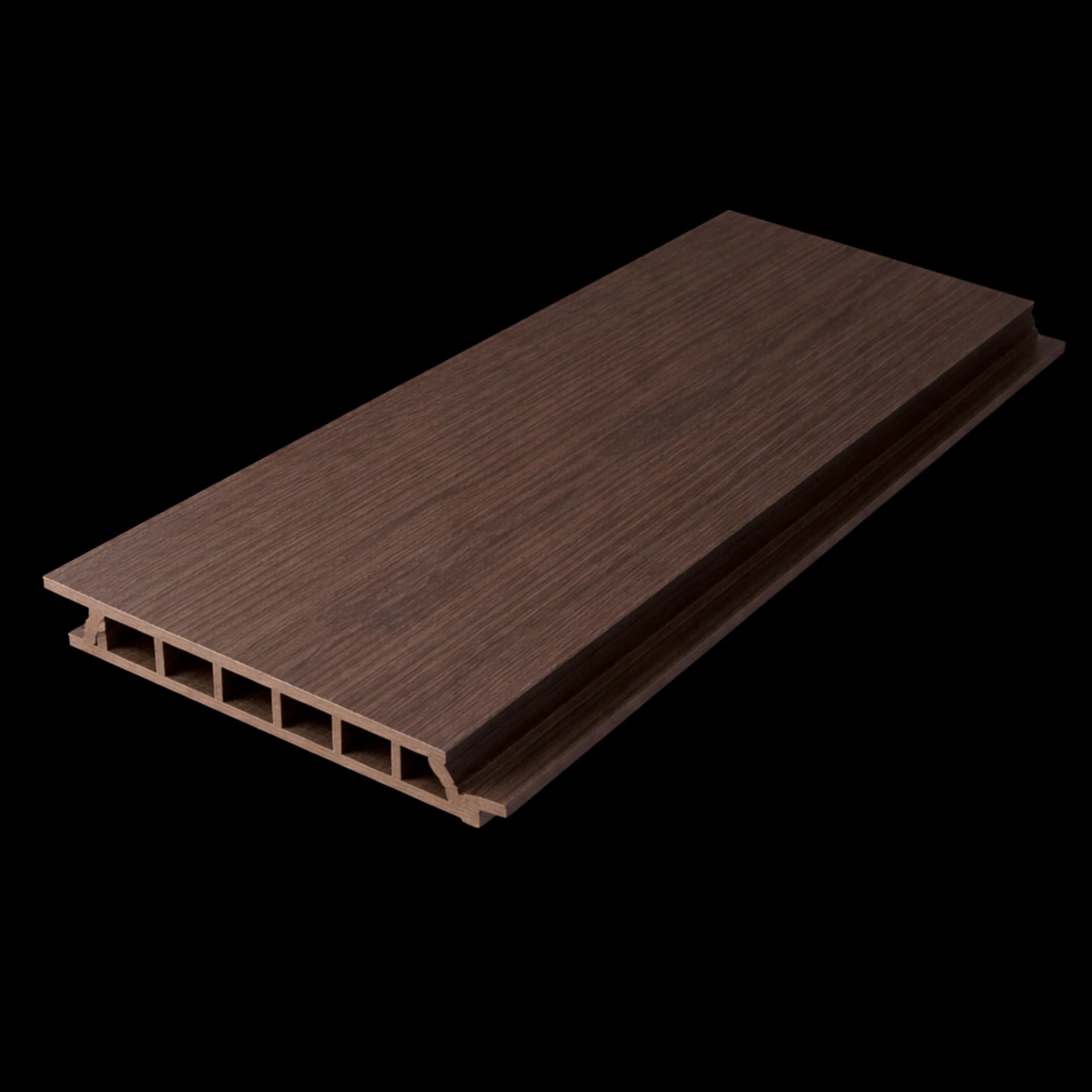
WPC Designer Cladding
Co-extruded wood-plastic composite cladding with a designer profile — the look of natural timber with none of the painting, sealing or rot.
- Profile
- Designer
- Material
- Wood-plastic composite
- Finish
- Co-extruded wood grain
- Use
- Exterior grade
WPC Cladding
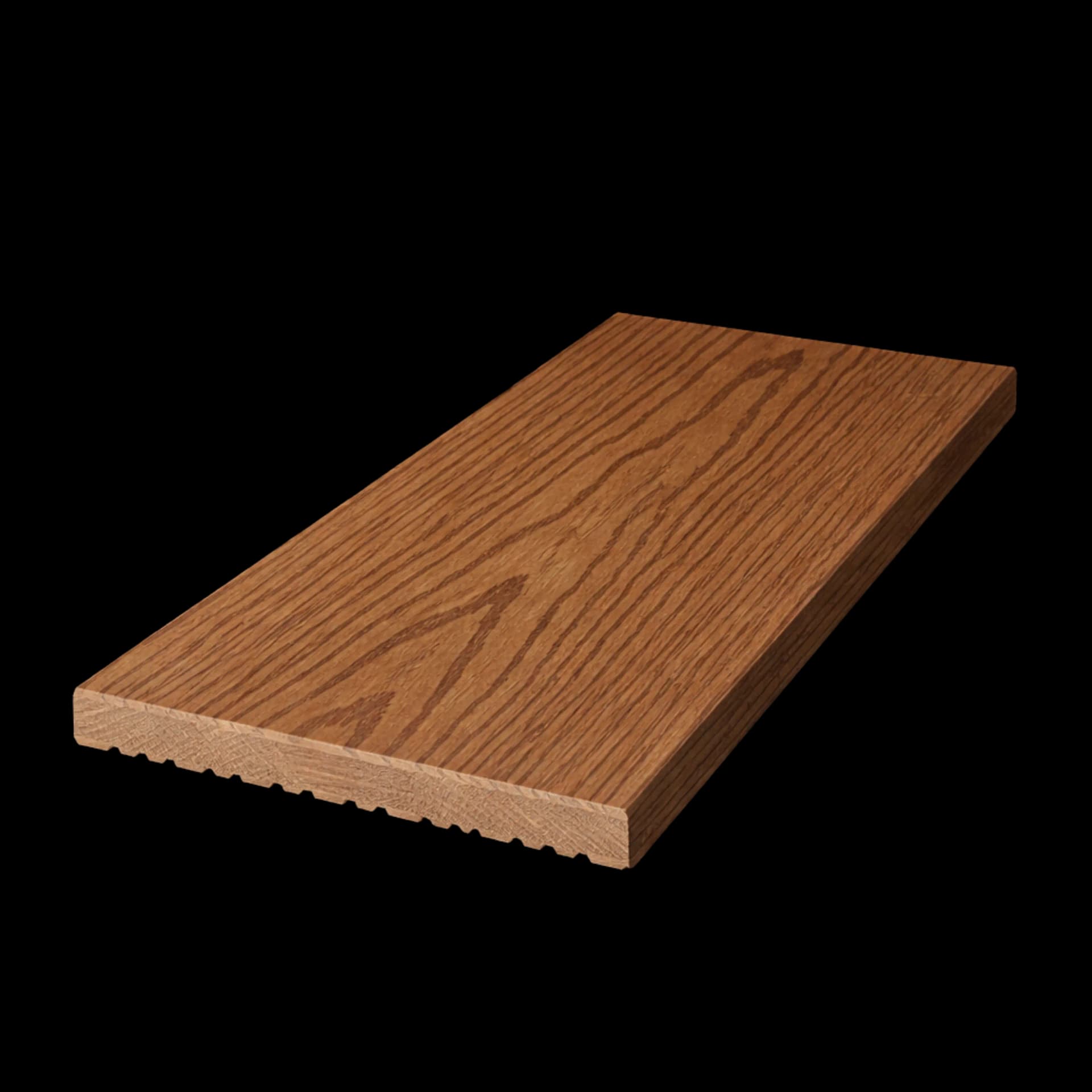
WPC Solid Cladding
Solid-core WPC cladding boards for high-traffic and exposed façades — dense, impact-tough and dimensionally stable through the seasons.
- Core
- Solid
- Material
- Wood-plastic composite
- Finish
- Wood grain
- Use
- Exterior grade