
TSS·WPC
WPC Cladding
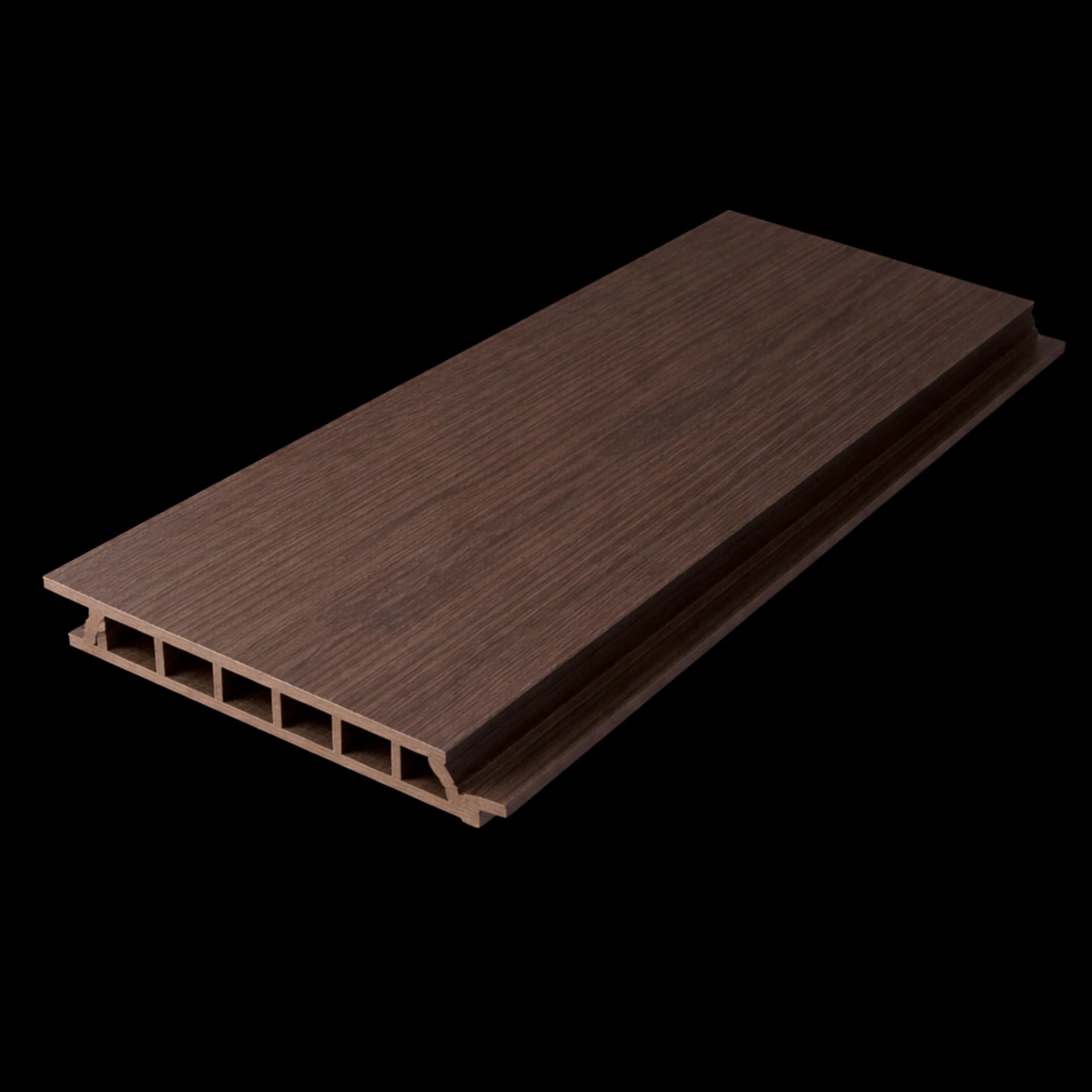
WPC Designer Cladding
Architectural façades, low upkeep.
WPC Designer Cladding combines the warmth and grain of natural timber with the engineered durability of a co-extruded wood-plastic composite. Each board pairs a structural WPC core with a tough polymer cap layer that locks out moisture, resists UV fade and shrugs off the surface staining, mould and movement that plague conventional softwood cladding. The designer profile gives architects a refined, contemporary façade line without the lifetime burden of painting, oiling or sealing.
WPC Designer Cladding combines the warmth and grain of natural timber with the engineered durability of a co-extruded wood-plastic composite. Each board pairs a structural WPC core with a tough polymer cap layer that locks out moisture, resists UV fade and shrugs off the surface staining, mould and movement that plague conventional softwood cladding. The designer profile gives architects a refined, contemporary façade line without the lifetime burden of painting, oiling or sealing.
Engineered for permanent exterior exposure, the boards hold their colour and finish across hot summers, freeze-thaw winters and coastal salt air. The capped surface is splinter-free, low-maintenance and washes down with plain water, making the system ideal for high-traffic frontages, entrance features and boundary treatments where appearance must endure with minimal intervention.
Supplied across Europe, North America and beyond, the range is manufactured to recognised European and international standards and ships with full technical and test documentation. A consistent profile geometry and concealed clip fixing deliver clean, repeatable installation on both new build and refurbishment projects.
- Profile
- Designer (rear-ventilated, concealed clip)
- Material
- Wood-plastic composite (WPC) with co-extruded polymer cap
- Finish
- Co-extruded embossed wood grain
- Use
- Exterior grade / ventilated façade
- Typical board width
- 150–160 mm (coverage)
- Typical board thickness
- 21–23 mm
- Typical board length
- 2,900–3,600 mm
- Typical density
- 1,250–1,400 kg/m³
- Reaction to fire
- Typical Class B-s1,d0 to D-s2,d0 (EN 13501-1)
- Water absorption
- Typical ≤ 2% by mass (24 h immersion)
- Thermal conductivity
- Typical 0.25–0.35 W/m·K
- Linear thermal expansion
- Typical 30–50 × 10⁻⁶ /K
- Slip / surface
- Splinter-free, low-maintenance capped surface
- Typical weight
- Approx. 4.5–5.5 kg per linear metre
- Colour stability
- Typical ΔE ≤ 5 after accelerated weathering
- Packaging
- Strapped bundles on pallets, edge-protected and shrink-wrapped
▸Building façades
Ventilated rainscreen cladding for residential, commercial and mixed-use frontages where a timber aesthetic must last with minimal upkeep.
▸Entrance features
Statement porches, canopies and reception surrounds that introduce warmth and texture at the building threshold.
▸Boundary walls
Durable cladding to perimeter and screen walls, delivering privacy and a coordinated finish across the plot.
▸Soffits
Underside lining to eaves, overhangs and walkways, providing a clean, moisture-tolerant finish in sheltered exterior zones.
▸Balcony & terrace screening
Vertical or horizontal infill panels that match adjoining decking and façade lines for a unified scheme.
▸Weatherproof
The co-extruded cap seals the core against rain, humidity and freeze-thaw cycling for stable, long-term exterior performance.
▸Fade resistant
UV-stabilised capping holds colour with minimal shift, keeping façades looking consistent year after year.
▸No painting
The factory finish never needs oiling, staining or repainting — routine washing with water keeps it presentable.
▸Easy installation
Concealed clip fixing and consistent profile geometry give fast, fastener-free face installation on standard battens.
▸Splinter-free & low-maintenance
The capped surface resists splitting, cracking and surface mould, reducing whole-life maintenance cost.
▸Dimensionally stable
The engineered WPC composition limits swelling, warping and movement compared with natural timber cladding.
EN 13501-1
Reaction-to-fire classification of construction products; establishes the Euroclass (e.g. B-s1,d0) declared for the boards.
EN 15534
Composites made from cellulose-based materials and thermoplastics (WPC) — characterisation, requirements and test methods for profiles used in cladding and decking.
EN 14915
Solid wood and wood-based panelling and cladding — performance characteristics and conformity evaluation relevant to façade cladding products.
ISO 9001
Quality management systems governing manufacture, traceability and consistent batch-to-batch quality of the production facility.
CE marking
Declaration of performance against the applicable harmonised standard, confirming the product may be placed on the European market.
- ▸Install over a rear-ventilated batten frame, maintaining a continuous air gap behind the boards to manage moisture and heat.
- ▸Allow expansion gaps at board ends and abutments per the technical data sheet to accommodate thermal movement.
- ▸Fix using the matched concealed clip system and corrosion-resistant stainless fasteners suited to the exposure category.
- ▸Acclimatise boards on site, flat and supported, before installation; store off the ground and protected from prolonged direct sun.
- ▸Set consistent batten centres (typically 400–600 mm) to support the profile and keep face lines true.
- ▸Cut with standard fine-tooth woodworking tools; de-burr edges and clear swarf from the ventilation cavity.
- Profile
- Designer — concealed clip, rear-ventilated face board
- Finish
- Co-extruded embossed wood grain
- Colour range
- Warm oak, walnut, teak, charcoal, slate grey and stone tones
- Orientation
- Suitable for horizontal or vertical installation
- Length options
- Cut to project lengths within the standard range (typically up to ~3,600 mm)
- System components
- Matched starter trims, corner and edge profiles, clips and fasteners
Stock colours and standard lengths typically dispatch within a short lead time, while bespoke colours, lengths and high-volume project quantities are produced to order with lead times confirmed at enquiry; physical samples and colour swatches are available on request. Every consignment ships with full documentation — technical data sheet (TDS), reaction-to-fire and performance test reports, declaration of performance for CE marking, and a written product warranty against fade and structural integrity — and we supply across Europe, North America and beyond with complete export paperwork, including commercial invoice, packing list and certificate of origin, prepared to suit the destination market.
WPC Designer Cladding
questions.
No. The co-extruded cap is the finished surface and requires no painting, oiling or sealing — routine cleaning with water and a soft brush is all that is needed.
Reaction to fire is classified to EN 13501-1, with a typical Euroclass in the range B-s1,d0 to D-s2,d0 depending on profile and formulation. The exact declared class for the supplied product is stated on the TDS and declaration of performance.
The capping is UV-stabilised and holds colour well, with a typical colour change of ΔE ≤ 5 after accelerated weathering. A slight, even mellowing in the first months is normal and stabilises thereafter.
Yes. The designer profile suits both horizontal and vertical installation over a ventilated batten frame; orientation only affects batten layout and trim selection.
Boards are secured with a concealed clip system onto battens, so no face fixings are visible. Stainless fasteners appropriate to the exposure category are used with the clips.
Yes. The system is designed as a rear-ventilated rainscreen; a continuous air gap behind the boards is required to manage moisture and thermal performance and to validate the warranty.
Yes. Matched starter, corner and edge profiles, clips and fasteners are available, and the range is supplied across Europe, North America and beyond with full technical and export documentation.
WPC Cladding
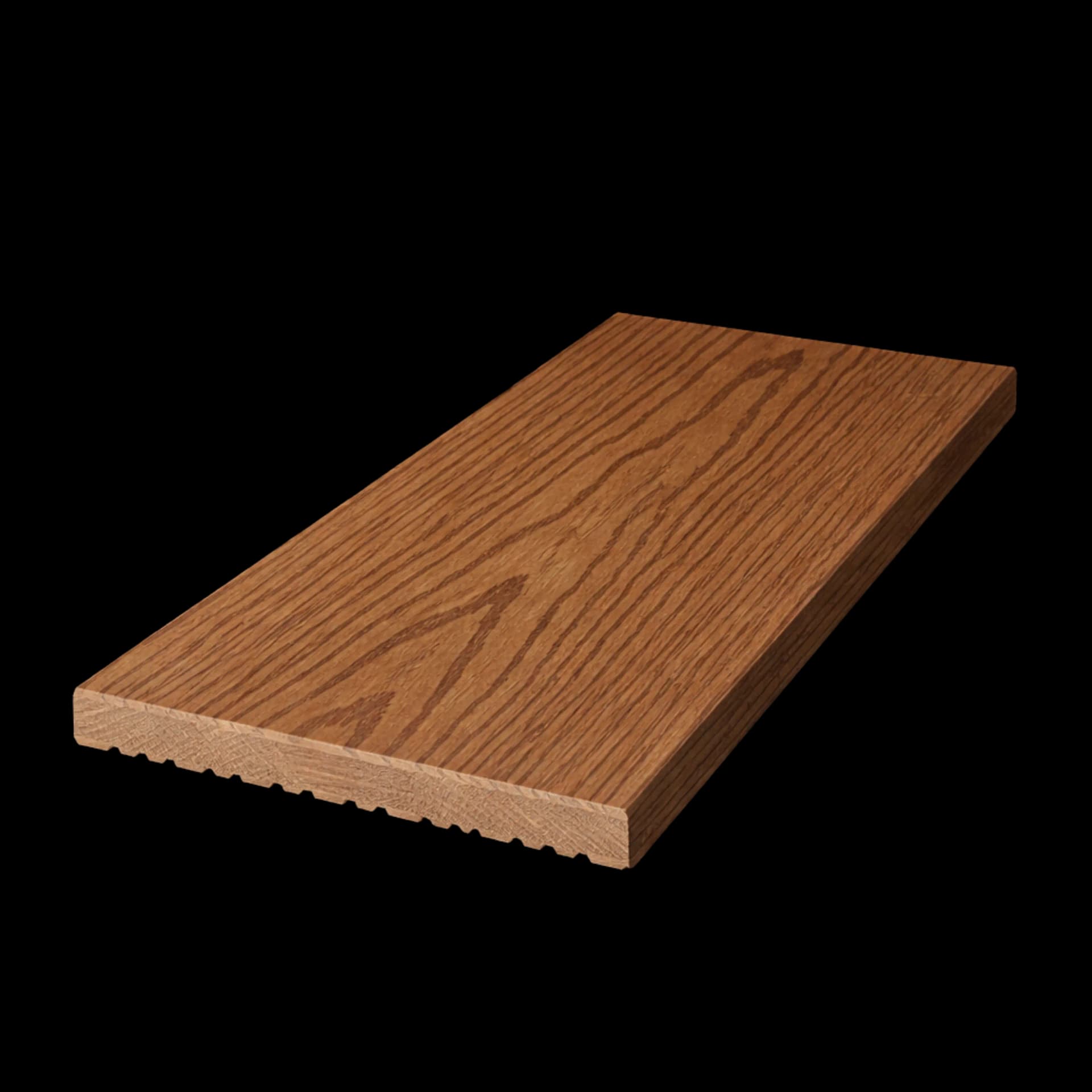
WPC Solid Cladding
Solid-core WPC cladding boards for high-traffic and exposed façades — dense, impact-tough and dimensionally stable through the seasons.
- Core
- Solid
- Material
- Wood-plastic composite
- Finish
- Wood grain
- Use
- Exterior grade
WPC Cladding
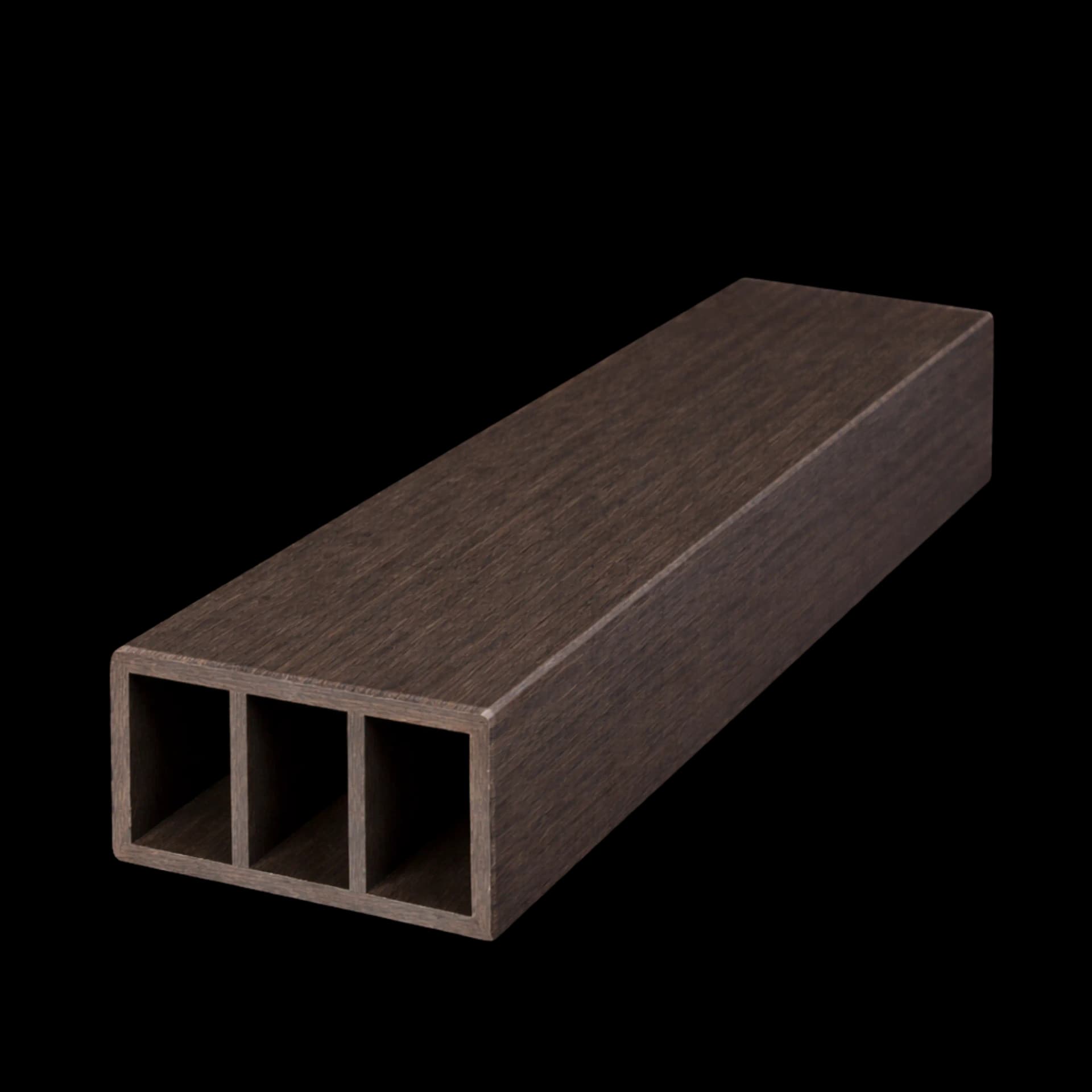
WPC Hollow Cladding
Hollow-section WPC cladding — lighter on the structure and quick to fix over battens, with the same weatherproof composite surface.
- Core
- Hollow
- Material
- Wood-plastic composite
- Finish
- Wood grain
- Use
- Exterior grade