
TSS·WPC
Louvers
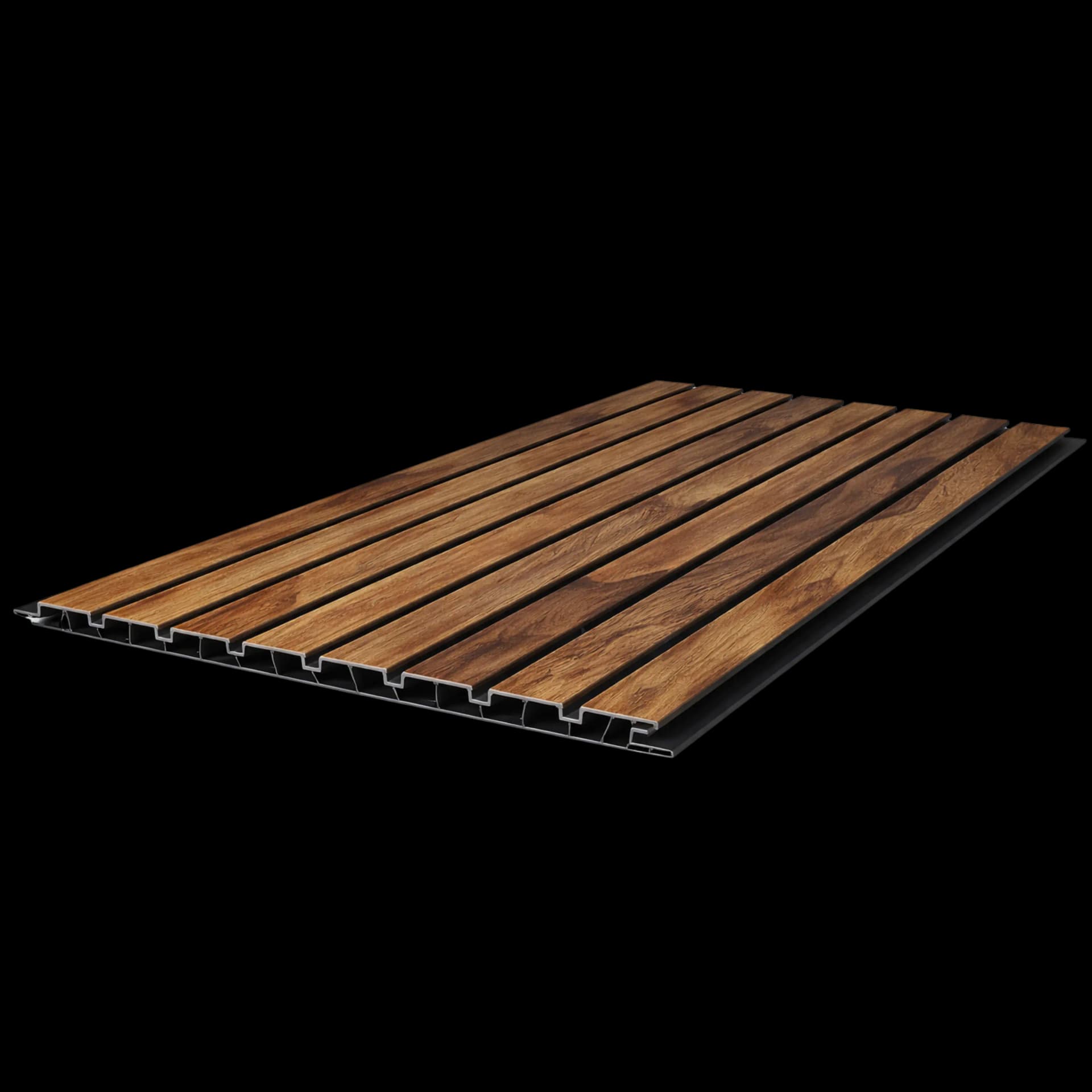
WPC Blade Louver
Shade and rhythm on the façade.
WPC blade louvers bring shade and visual rhythm to the building envelope. Each blade is extruded from wood-plastic composite — a stable blend of wood fibre and polymer that holds its line where natural timber would warp, split or grey. Set vertically or horizontally across glazing, walkways and plant rooms, the profile filters direct sun, screens services from view and gives the elevation a deliberate, repeating cadence.
WPC blade louvers bring shade and visual rhythm to the building envelope. Each blade is extruded from wood-plastic composite — a stable blend of wood fibre and polymer that holds its line where natural timber would warp, split or grey. Set vertically or horizontally across glazing, walkways and plant rooms, the profile filters direct sun, screens services from view and gives the elevation a deliberate, repeating cadence.
The composite is engineered for exterior service. It resists rain, UV and humidity without the seasonal sanding, oiling or repainting that solid wood demands, and the colour runs through the body of the blade rather than sitting on the surface. Blades carry on a concealed support system, so spans align cleanly and the fixing line stays hidden from the street.
Supplied as a coordinated system of blades, carriers and trims, the louver is straightforward to set out and quick to install. We supply WPC blade louvers across Europe, North America and beyond, with samples, technical data and full export documentation to support specification and approval on each project.
- Profile
- Blade
- Material
- Wood-plastic composite (WPC)
- Finish
- Through-coloured wood tones
- Use
- Exterior grade
- Density (typical)
- 1.20-1.40 g/cm3
- Blade depth (typical)
- 50-100 mm
- Blade thickness (typical)
- 20-30 mm
- Standard length (typical)
- 2.9 m / 5.8 m
- Thermal conductivity (typical)
- ~0.20 W/m·K
- Linear thermal expansion (typical)
- ~50 x 10^-6 /K
- Water absorption (typical)
- <2% by mass (24 h)
- Reaction to fire (typical)
- Class D-s2,d0 to EN 13501-1
- UV / weathering
- Colour-stabilised for exterior exposure
- Weight (typical)
- ~3.5-5.0 kg/m run, profile dependent
- Support system
- Aluminium carrier with concealed fixings
- Packaging
- Bundled, film-wrapped on timber pallets
▸Façade sun-shading
Blades break direct solar gain across glazed elevations, reducing glare and cooling load while keeping daylight and views.
▸Plant screening
Vertical or horizontal blades conceal rooftop and ground-level services without trapping airflow.
▸Pergolas and canopies
Lightweight blades form shaded overhead structures and walkway covers with a warm timber appearance.
▸Boundary and privacy screens
Aligned blade runs define site boundaries and screen sightlines while admitting light and ventilation.
▸Balcony and terrace screens
Provides privacy and wind filtering to balconies and terraces with a coordinated façade finish.
▸Brise-soleil bands
Horizontal blade arrays act as brise-soleil to shade upper storeys and articulate the elevation.
▸Controls solar gain
Blade spacing and orientation are set to cut direct sun and glare while preserving daylight and outward views.
▸Modular spans
Standard blade lengths and carriers set out quickly into long, even runs with consistent alignment.
▸Weatherproof and low-maintenance
Resists rain, UV and humidity without the sanding, oiling or repainting that solid timber requires.
▸Architectural rhythm
Repeating blades give the elevation a strong, deliberate cadence and a natural wood appearance.
▸Concealed fixing
Aluminium carriers and hidden brackets keep the fixing line out of view for a clean finish.
▸Through-coloured body
Colour runs through the composite, so minor scuffs and edge cuts stay visually consistent.
EN 13501-1
Reaction-to-fire classification of construction products; WPC blades typically declared in Euroclass (e.g. D-s2,d0).
EN 15534 / ISO 16616
Wood-plastic composite (WPC) profiles — characterisation, requirements and test methods for composites used in cladding and exterior applications.
ASTM D7032
Establishing performance ratings for wood-plastic composite deck and exterior profiles (flexural, weathering and durability).
CE marking
Declaration of performance and conformity for construction products placed on the EU/EEA market.
ISO 9001
Quality management system governing manufacture, traceability and consistent product quality.
- ▸Acclimatise blades on site, laid flat and supported, before fixing to allow temperature equalisation.
- ▸Set out the aluminium carrier system first; check level, plumb and consistent blade centres before loading blades.
- ▸Leave expansion gaps at blade ends and run terminations to accommodate thermal movement of the composite.
- ▸Fix only with the carriers, brackets and stainless fasteners specified for the system; do not face-screw blades randomly.
- ▸Support long spans with intermediate carriers per the layout to prevent deflection and keep lines true.
- ▸Cut with carbide-tipped blades; de-burr cut ends and keep drainage paths clear at sills and bases.
- Profile
- Blade — flat and angled (airfoil) options
- Blade depth
- 50, 75 or 100 mm (profile dependent)
- Orientation
- Vertical fins or horizontal brise-soleil
- Wood tones
- Teak, walnut, oak, grey and charcoal
- Finish texture
- Brushed / wood-grain embossed
- Length
- 2.9 m and 5.8 m standard; cut-to-size on request
Stock profiles and popular wood tones typically ship within a short lead time, while made-to-order colours, blade depths and cut-to-size runs are produced to programme on confirmed quantities; physical samples and colour references are available before commitment. Every consignment is supplied with a technical data sheet, applicable reaction-to-fire and WPC performance test reports, a declaration of performance for CE marking and a product warranty, and we export worldwide — across Europe, North America and beyond — with full commercial and shipping documentation to support customs clearance and project approval.
WPC Blade Louver
questions.
The composite is colour-stabilised and dimensionally stable for exterior service. Some gentle, even mellowing of tone can occur with prolonged UV exposure, but the blades resist the warping, splitting and greying typical of untreated solid timber.
WPC blades are typically declared to EN 13501-1, with a representative reaction-to-fire class of D-s2,d0. We can confirm the exact class against the finish and project requirement and provide the supporting test report.
Yes. Blade depth, centres and orientation (vertical fins or horizontal brise-soleil) are selected to achieve the required solar cut-off and privacy while retaining daylight and views.
Blades carry on an aluminium support system with concealed brackets and stainless fasteners, so the fixing line stays hidden. Carrier centres are set out to suit blade length and wind loading.
Standard lengths are typically 2.9 m and 5.8 m, with cut-to-size on request. Finishes include a range of wood tones and greys in brushed or wood-grain embossed textures.
Routine cleaning with water and a mild detergent is generally all that is required. No sanding, oiling or repainting is needed, unlike natural timber louvers.
Yes. We supply across Europe, North America and beyond, and every order ships with a technical data sheet, test reports, declaration of performance and full export documentation.
Louvers
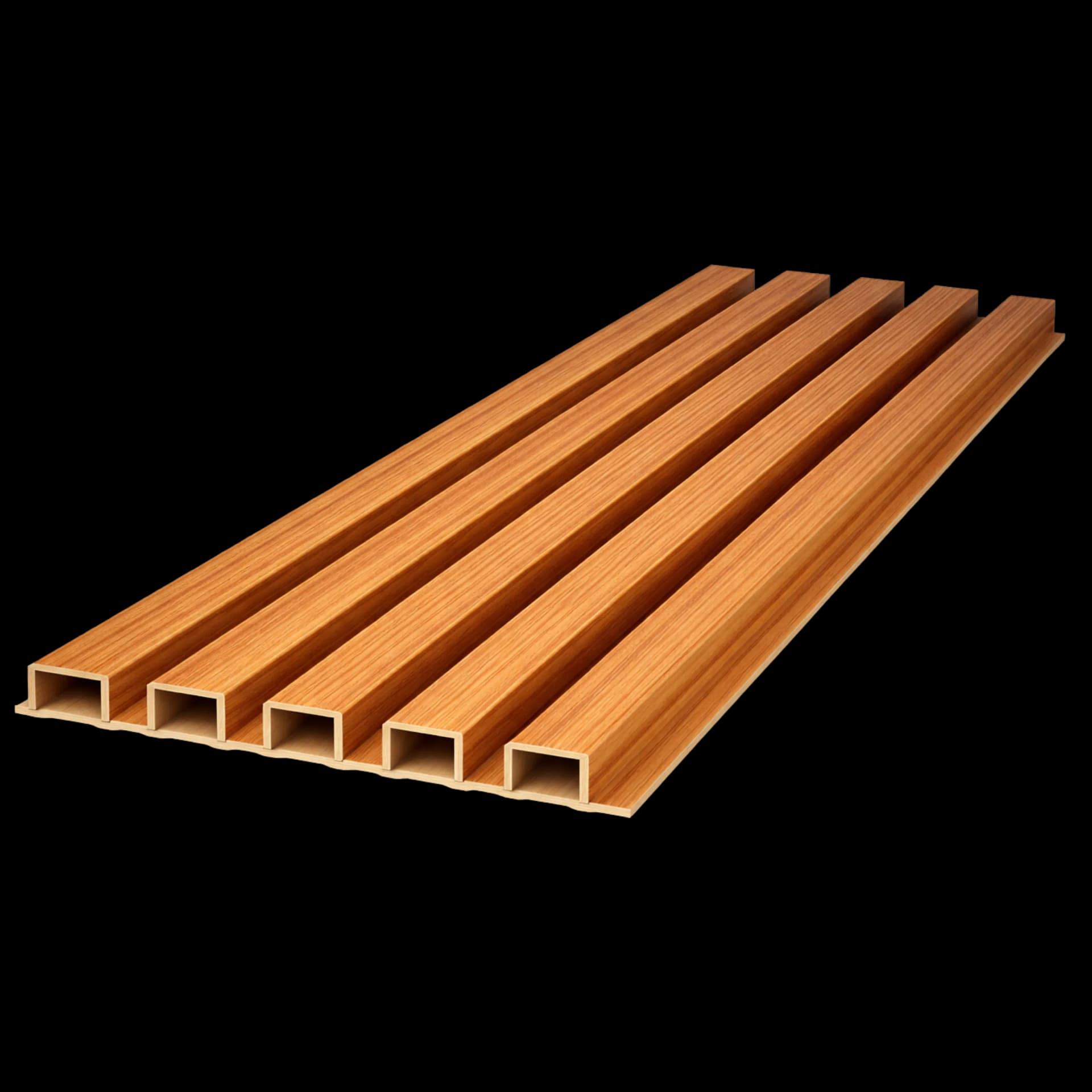
WPC Square Louver
Square-section WPC louvers for ceilings, partitions and feature screens — a crisp, contemporary grid that hides services and softens light.
- Profile
- Square section
- Material
- Wood-plastic composite
- Finish
- Wood tones
- Use
- Interior / exterior
Louvers
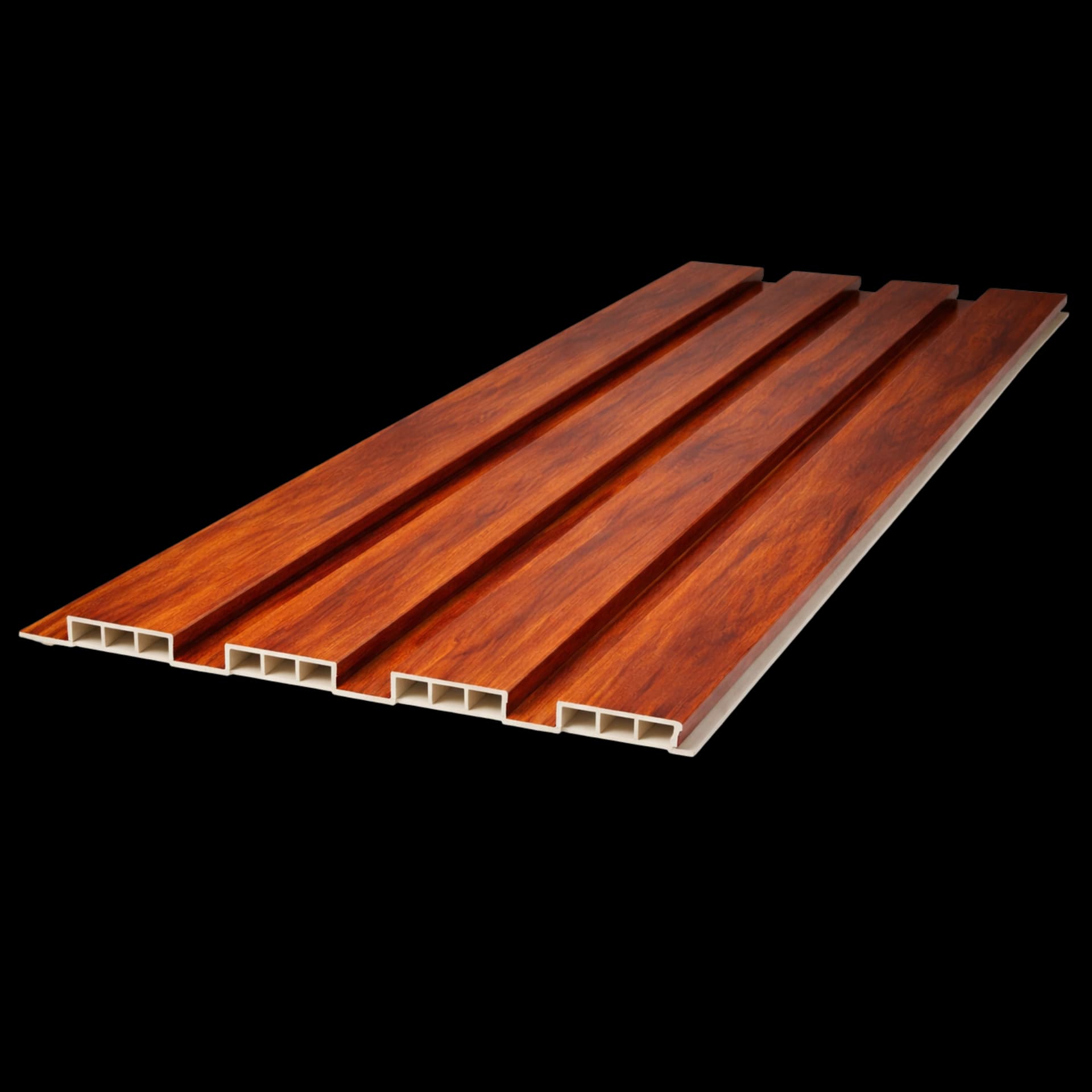
WPC Rectangular Louver
Rectangular WPC louvers for larger spans and bolder shadow lines — a strong, low-maintenance screen for façades and entrances.
- Profile
- Rectangular
- Material
- Wood-plastic composite
- Finish
- Wood tones
- Use
- Exterior grade