
TSS·CEM
Cement Boards
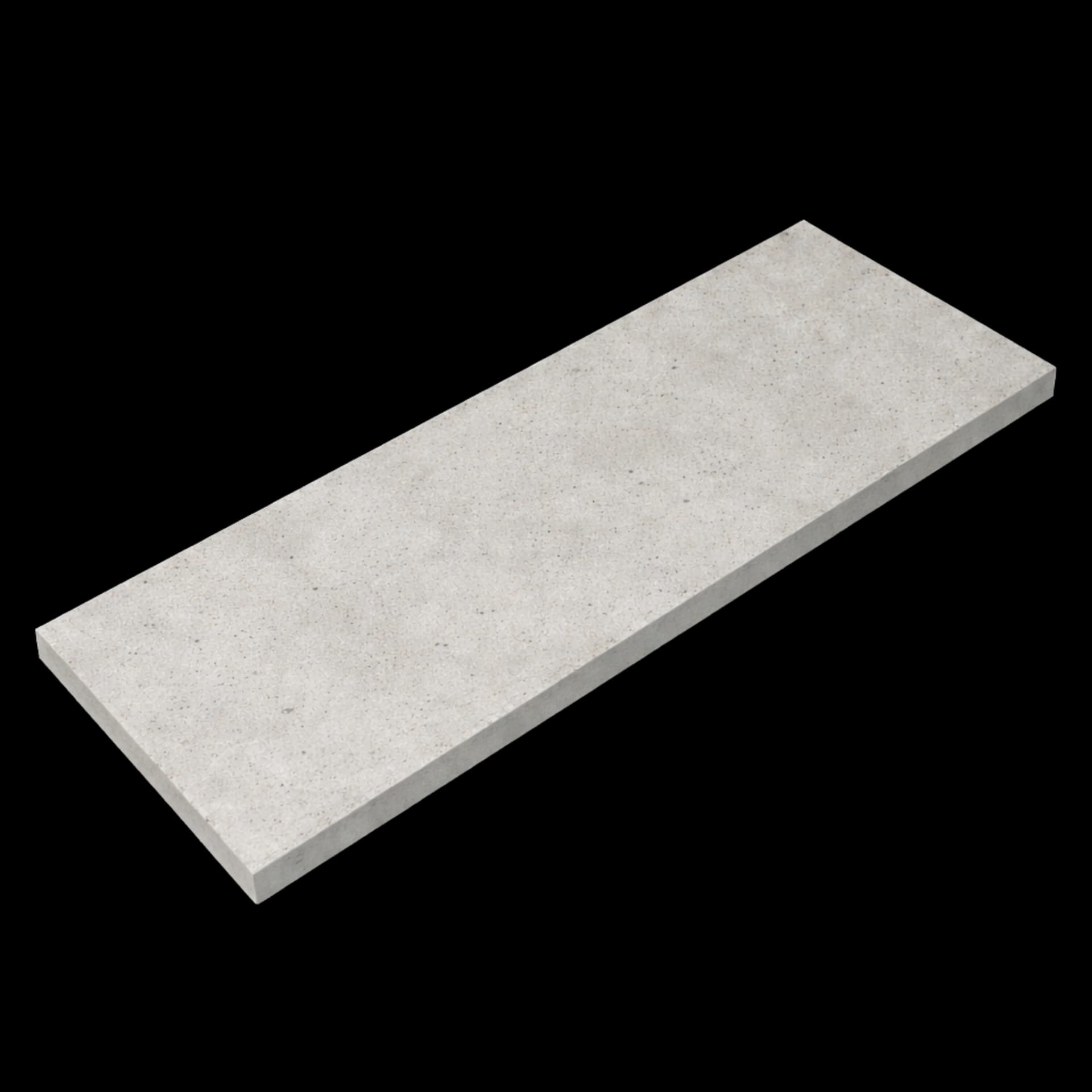
Cement Particle Board
Strength of cement, worked like wood.
Cement Particle Board from TSS unites the structural strength and durability of mineral cement with the everyday workability of timber. Manufactured by pressing graded softwood particles within a Portland-cement matrix, each panel cures into a dense, dimensionally stable sheet that saws, drills, screws and routs with conventional joinery tools — yet behaves like a mineral building board once fixed in place. The result is a single panel that carries load, holds fixings and stands up to fire, moisture and biological attack without the limitations of plywood or standard particleboard.
Cement Particle Board from TSS unites the structural strength and durability of mineral cement with the everyday workability of timber. Manufactured by pressing graded softwood particles within a Portland-cement matrix, each panel cures into a dense, dimensionally stable sheet that saws, drills, screws and routs with conventional joinery tools — yet behaves like a mineral building board once fixed in place. The result is a single panel that carries load, holds fixings and stands up to fire, moisture and biological attack without the limitations of plywood or standard particleboard.
Because the board is cement-bound rather than resin-bound, it is inherently resistant to water, frost, fungal decay and termite attack, and contributes very little to the development of a fire. This makes it equally at home as a robust mezzanine and raised-access floor deck, as the racking layer in heavy-duty partitions, and as a weather-facing substrate behind rainscreen and rendered façade systems. Its mass also delivers a useful acoustic benefit, helping partitions and floors meet airborne and impact sound targets.
Supplied to EN 634 and CE-marked under EN 13986, TSS Cement Particle Board is exported across Europe, North America and beyond with full technical documentation. We support specifiers and contractors from sample stage through to delivery, providing the data sheets, classification reports and fixing guidance needed to detail the board with confidence in both interior and exterior applications.
- Nominal thickness
- 12 mm (also 8–40 mm)
- Standard sheet size
- 1220 × 2440 mm
- Density
- approx. 1350 kg/m³ (typical)
- Reaction to fire
- Class B-s1,d0 (EN 13501-1)
- Thermal conductivity (λ)
- approx. 0.26 W/m·K (typical)
- Bending strength
- ≥ 9 N/mm² (typical, EN 634)
- Modulus of elasticity
- approx. 4500 N/mm² (typical)
- Water absorption (24 h)
- approx. 14% (typical)
- Thickness swelling (24 h)
- ≤ 1.5% (typical)
- Moisture content (ex-works)
- 9 ± 3% (typical)
- Linear/thermal expansion
- approx. 0.011 mm/m·K (typical)
- Surface finish
- Smooth sanded, natural grey
- Edge profile
- Square edge (TG to order)
- Weight per board (12 mm)
- approx. 49 kg per 1220 × 2440 sheet (typical)
- Use class
- Interior & exterior, humid/load-bearing
- Packaging
- Banded pallets, edge-protected, shrink-wrapped
▸Mezzanine & raised flooring
A high-density, load-bearing deck for mezzanine platforms, raised-access floors and dry screed build-ups where strength and dimensional stability are essential.
▸Heavy-duty partitions
Robust racking and lining board for demountable and fixed partitions in commercial, industrial and high-traffic environments.
▸External cladding & façade
A weather-resistant substrate and finish board for rainscreen, rendered and ventilated façade systems exposed to moisture and frost.
▸Prefabrication & modular
Dimensionally consistent sheets for factory-built wall, floor and roof cassettes in off-site and modular construction.
▸Soffits & fascias
Durable, rot-proof boarding for external soffits, fascias and sheltered ceiling areas where timber-based panels would fail.
▸Fire-protective linings
Lining layer in fire-rated wall and floor assemblies where low fire contribution and mineral content are required.
▸High load bearing
Dense cement matrix carries significant point and distributed loads, making it suitable for flooring and structural racking duties.
▸Water & fire resistant
Mineral-bound construction resists moisture, frost and decay while contributing very little to fire spread or smoke.
▸Termite & rot proof
Cement bonding renders the board unappetising to insects and immune to fungal decay, ideal for exterior and humid zones.
▸Sound insulating
Its mass improves airborne and impact sound reduction in partitions and floor build-ups, helping meet acoustic targets.
▸Easy to work
Cuts, drills, screws and routs with standard carbide tooling — installed using familiar timber-trade techniques.
▸Dimensionally stable
Low thickness swelling and minimal moisture movement keep joints tight and surfaces flat across changing conditions.
EN 634-1 / EN 634-2
The dedicated product standard for cement-bonded particle boards — defines general requirements and the specific mechanical, density and durability requirements for boards bonded with Portland cement for dry, humid and exterior use.
EN 13986
Wood-based panels for use in construction — characteristics, conformity assessment and the basis for CE marking, covering mechanical, fire, formaldehyde and durability declarations.
EN 13501-1
Reaction-to-fire classification of construction products; this board is typically classified B-s1,d0 (limited fire contribution, lowest smoke, no flaming droplets).
ASTM C1185
US test methods for non-asbestos fibre-cement and cement-bonded flat sheet — used to verify flexural strength, density, moisture movement and freeze–thaw performance for North American projects.
ISO 9001
Quality management system under which manufacture, inspection and batch traceability are controlled, supporting consistent and documented product supply.
- ▸Acclimatise boards flat and supported on site for 24–48 hours before fixing so moisture content equalises with the surroundings.
- ▸Cut with carbide- or diamond-tipped blades and extract dust; pre-drill near edges to avoid spalling and to set fixings cleanly.
- ▸Fix with corrosion-resistant screws at the recommended centres, keeping fixings 15–20 mm from board edges and corners.
- ▸Leave a 3–5 mm expansion gap at board perimeters and between sheets; design movement joints into large floor and façade areas.
- ▸For external use, seal cut edges and detail to shed water; use compatible breather membranes and ventilated cavities on façades.
- ▸Store flat on level bearers, fully supported and protected from ground moisture and standing water until installation.
- Standard thickness range
- 8, 10, 12, 16, 18, 20, 24 mm and above
- Standard sheet size
- 1220 × 2440 mm
- Extended sizes
- 1250 × 3050 mm and cut-to-size on request
- Edge profile
- Square edge as standard; tongue-and-groove to order
- Surface finish
- Natural sanded grey (paint, render or tile-ready)
- Grade
- Interior/humid and exterior load-bearing grades
Stock thicknesses and the standard 1220 × 2440 mm format ship from inventory on short lead times, while extended sizes, tongue-and-groove edges and cut-to-size panels are produced to order with confirmed schedules at the time of enquiry. Representative samples and full technical documentation — Technical Data Sheet, EN 13501-1 reaction-to-fire classification report, EN 634 / EN 13986 conformity and CE declaration of performance, and a product warranty — are provided on request, and every consignment is supplied with full export documentation for delivery across Europe, North America and beyond.
Cement Particle Board
questions.
Because it contains wood particles within the cement, the accurate European reaction-to-fire class is B-s1,d0 to EN 13501-1 — limited fire contribution, lowest smoke and no flaming droplets. It is not an A1/A2 mineral board, and we classify it honestly so it can be specified correctly within fire-rated assemblies.
Yes. The cement bond makes it resistant to moisture, frost and decay, so it performs in external cladding, soffits and humid interiors. Cut edges should be sealed and façade details designed to shed water and ventilate the cavity.
At approximately 1350 kg/m³ density and ≥ 9 N/mm² typical bending strength, the board is well suited to mezzanine and raised flooring. We provide span and joist-spacing guidance against your imposed loads so the build-up can be verified for your design case.
It works like a dense timber board — cut with carbide or diamond tooling, pre-drill near edges, and fix with corrosion-resistant screws at recommended centres, leaving a 3–5 mm expansion gap between sheets.
The natural sanded grey surface accepts paint, render, tile adhesives and most decorative systems directly, with appropriate priming. It is also frequently left as an exposed industrial finish.
Standard supply is 12 mm in 1220 × 2440 mm, with thicknesses from 8 mm to 40 mm, extended sheet sizes and cut-to-size panels available to order in interior/humid and exterior load-bearing grades.
Every order is supported by a Technical Data Sheet, EN 13501-1 classification report, EN 634 / EN 13986 conformity and CE declaration of performance, warranty and complete export paperwork for worldwide delivery.
Cement Boards
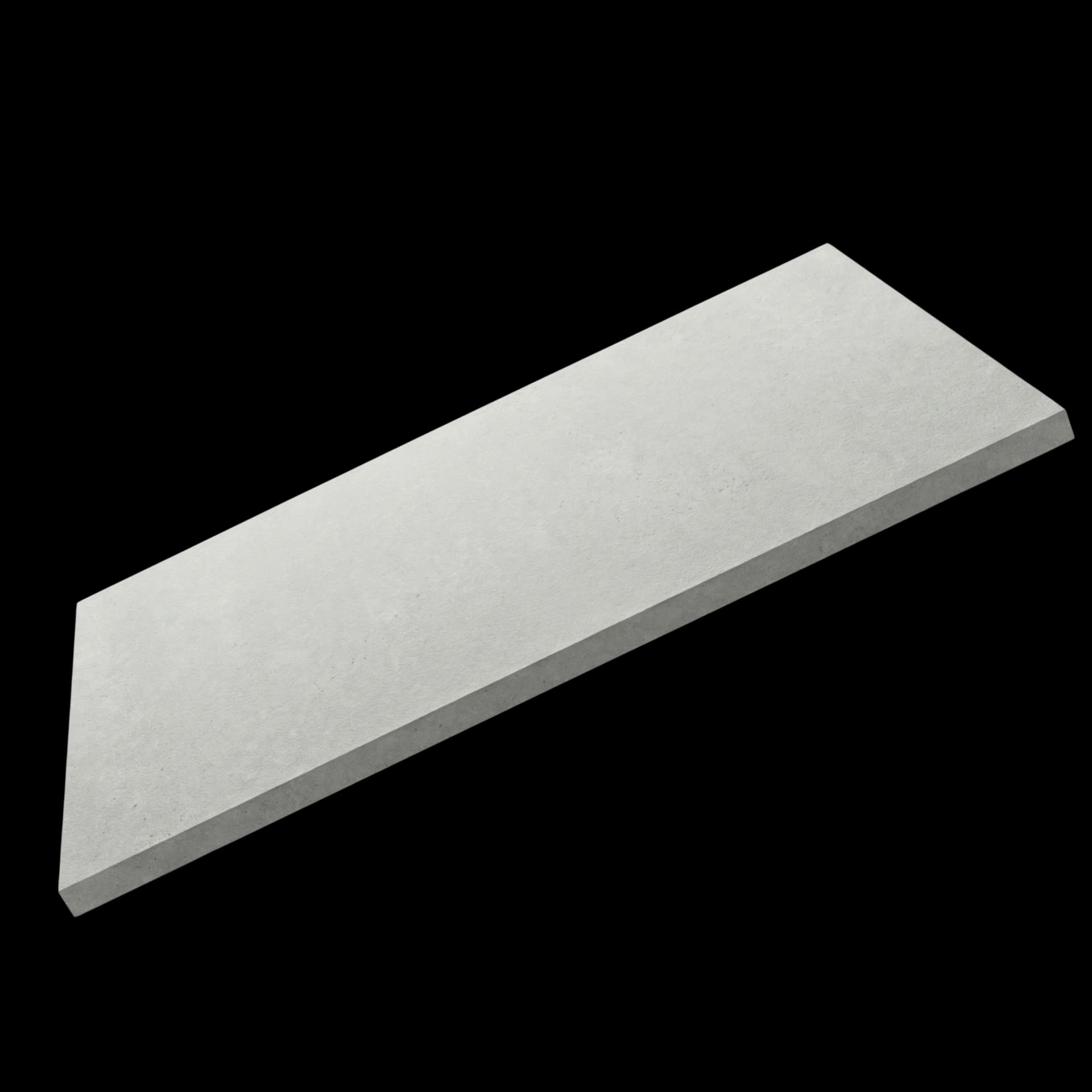
Fiber Cement Board
Fiber-cement boards in 6, 8 and 12 mm — a Class-A fire-rated, moisture-proof, termite-proof board for partitions, ceilings, cladding and flooring.
- Thickness
- 6 · 8 · 12 mm
- Size
- 1220 × 2440 mm
- Fire
- Class A
- Density
- 1.2–1.3 g/cm³
Cement Boards
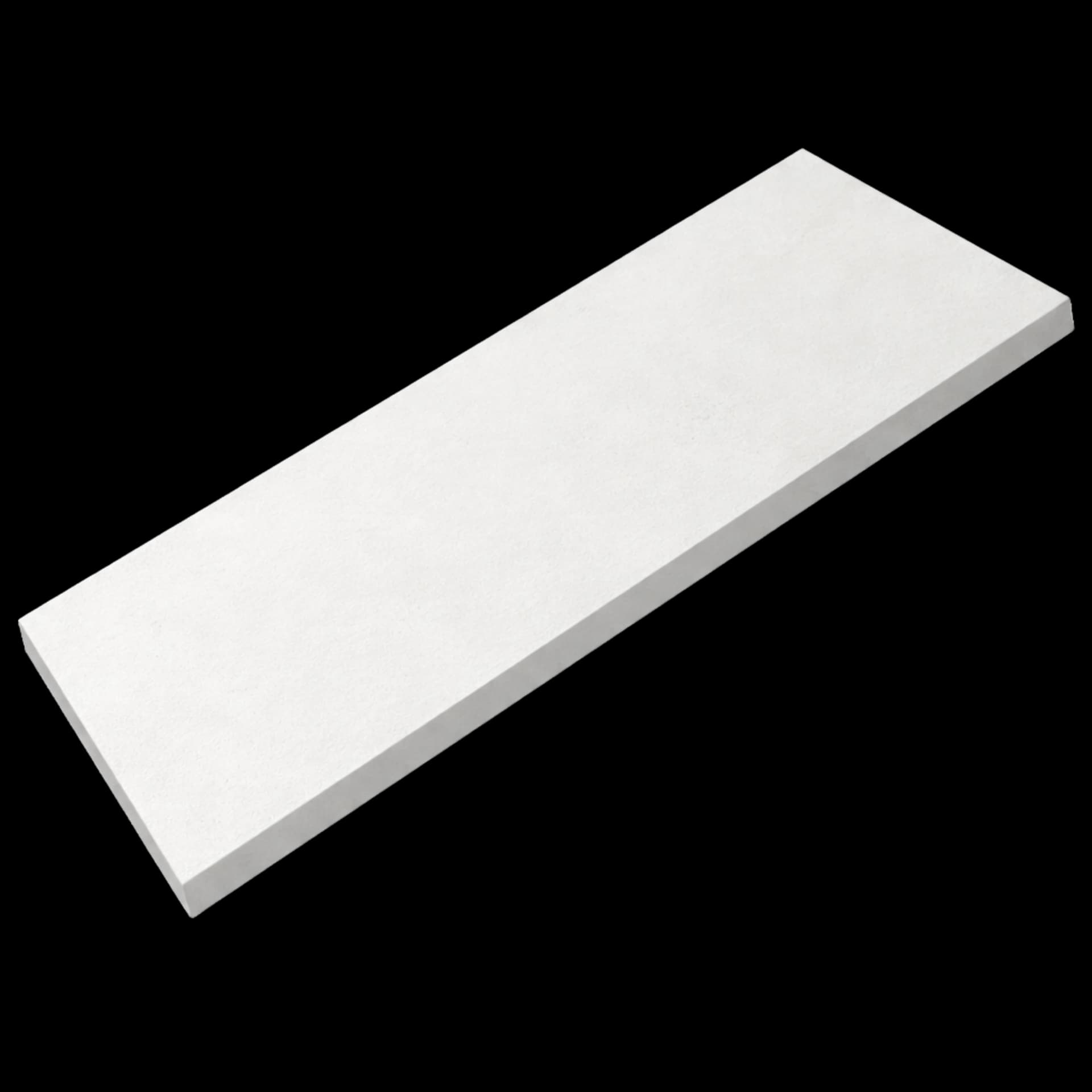
Calcium Silicate Board
Lightweight calcium-silicate boards rated A1 non-combustible — the go-to for fire protection, ceiling systems and duct enclosures. Asbestos-free.
- Thickness
- 6 mm+
- Size
- 1220 × 2440 mm
- Fire
- Class A1 (non-combustible)
- Make
- Asbestos-free